Key facts at a glance
- ✓Korea has the fastest internet in Asia, with home plans from 20,000-40,000 KRW/month
- ✓You need an ARC for a postpaid phone plan; prepaid SIMs are available with passport only
- ✓The T-money card works on all subways, buses, and even some taxis and convenience stores
- ✓Same-day and next-day delivery is standard through Coupang and other online retailers
- ✓Garbage sorting is mandatory and strictly enforced, with designated bags required
Overview
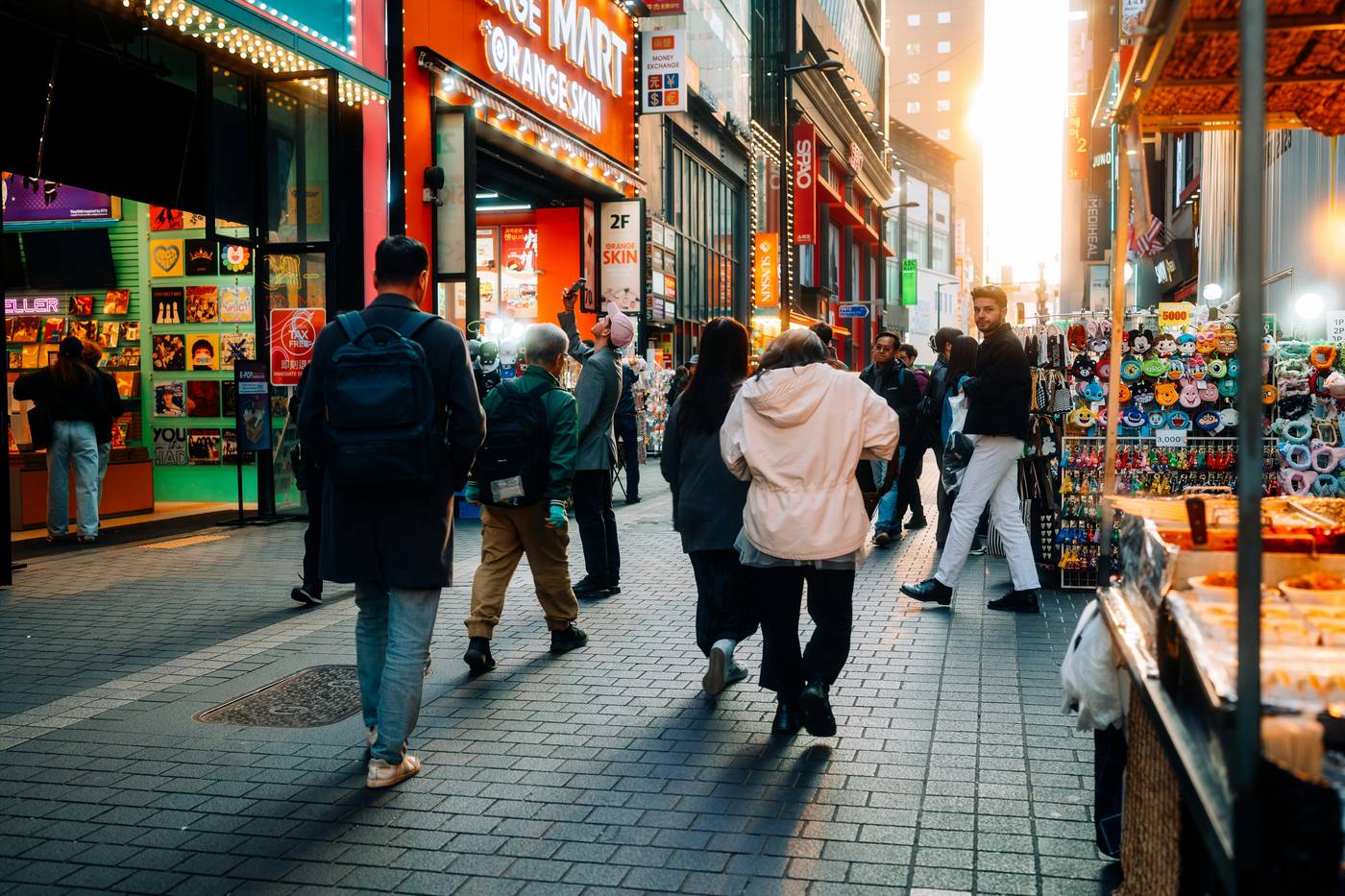
South Korea is one of the most convenient countries in the world for daily living. Everything from ordering food to paying bills can be done through your phone. Public transportation is world-class, internet speeds are among the fastest globally, and delivery services operate at a speed that will surprise most newcomers.
That said, there is a learning curve. Many services default to Korean, the garbage sorting system is strict, and cultural norms around hierarchy and etiquette take some adjustment. This guide covers the practical essentials so you can settle in quickly and avoid the common frustrations foreigners face in their first months.
1,550
Subway base fare
20-40K
Home internet/month
200+
Average internet speed
30-70K
Phone plan/month
Phone plans and SIM cards
A Korean phone number is essential. You will need it for bank accounts, app registrations, delivery services, and identity verification. Korea has three major carriers and a growing number of budget MVNOs.
| Carrier | Coverage | Foreigner Friendly | Price Range |
|---|---|---|---|
| SKT (SK Telecom) | Best overall | Good | 40,000-80,000 KRW/mo |
| KT (Korea Telecom) | Excellent | Good | 35,000-75,000 KRW/mo |
| LG U+ | Good | Average | 30,000-70,000 KRW/mo |
| MVNOs | Varies | Limited | 10,000-30,000 KRW/mo |
Prepaid vs postpaid
Prepaid SIM: Available at the airport or convenience stores with just your passport. Good for short-term stays. Limited data plans and no identity verification capability (so you cannot use it for bank signups or Korean apps that require phone verification).
Postpaid plan: Requires an ARC (Alien Registration Card). This is what you need for full functionality in Korea, including bank account setup, app verification, and delivery services. Visit a carrier store with your ARC and passport to sign up.
Tip: MVNOs (budget carriers like Tplus, Hello Mobile, and U+ Prepaid) use the same networks as the big three but cost significantly less. However, signing up as a foreigner can be harder, and customer support is usually Korean-only.
Monthly phone plan pricing by carrier (KRW)
Source: Carrier websites, 2026
Internet and connectivity
South Korea consistently ranks as one of the fastest countries in the world for internet speed. Most apartments come with fiber-optic connections, and free Wi-Fi is available in virtually every cafe, subway station, and public building.
Home internet options
The main providers are KT, SK Broadband, and LG U+. Many landlords already have a contract in place, so check with your landlord before signing a new plan. Contracts are typically 1-3 years with early termination fees.
Transportation
Korea has one of the best public transportation systems in the world. The subway and bus networks are extensive, affordable, and run on time. Most foreigners never need a car, especially in Seoul.
T-money card
The rechargeable transit card used across all subways, buses, and some taxis. Buy one at any convenience store for 2,500 KRW and top it up as needed. You can also use a mobile T-money through Samsung Pay or certain apps.
Subway
Seoul's subway has 23 lines covering the entire metro area. Base fare is 1,550 KRW (about $1 USD). Trains run from approximately 5:30 AM to midnight. All stations have English signage and announcements.
Buses
Color-coded by route type: blue (trunk), green (branch), red (express), yellow (circular). Same T-money card works, and transfers between subway and bus are free within 30 minutes.
KTX (high-speed rail)
Connects Seoul to Busan in about 2.5 hours. Tickets range from 50,000-60,000 KRW one way. Book through the Korail app or website. SRT is a competing service on the same route at similar prices.
Taxis
Affordable compared to most Western countries. Base fare is 4,800 KRW. Use Kakao T app to hail taxis (works like Uber). The app has English support. Late night surcharges apply from midnight to 4 AM.
Important: Naver Map and Kakao Map are far more accurate than Google Maps in Korea. Download both before you arrive. Google Maps has limited transit data and inaccurate driving directions in Korea due to national security regulations on mapping data.
Driving license conversion
If you hold a valid driver's license from most countries, you can convert it to a Korean license without taking a road test. The process is straightforward but requires an ARC.
What you need
Visit your nearest Driver's License Examination Office (운전면허시험장). You will need to pass a basic vision and color blindness test. Countries with reciprocal agreements (including most of the US, Canada, EU, UK, Australia, and Japan) can convert directly. Some countries require a written test. The whole process typically takes 2-3 hours and costs around 12,000 KRW.
Shopping
Korea is a shopper's paradise, both online and offline. Same-day delivery has become the norm, and the convenience store culture is unmatched.
Online shopping
- •Coupang: Korea's Amazon equivalent. "Rocket Delivery" gets most items to you by the next morning. Coupang Rocket WOW membership (4,990 KRW/mo) gives free shipping and Coupang Play streaming.
- •SSG.com: Online mall run by Shinsegae Group. Good for groceries, fashion, and household items.
- •Market Kurly: Premium grocery delivery with overnight service. Order by 11 PM and receive fresh groceries by 7 AM the next morning.
Offline shopping
- •E-mart / Homeplus: Large supermarkets similar to Walmart. Good for weekly grocery runs and household supplies.
- •Costco: Available in Korea with the same membership model. Accepts foreign Costco memberships. Popular with expat families.
- •Convenience stores (GS25, CU, 7-Eleven): Found on virtually every block. Open 24/7. You can pay bills, pick up packages, buy transit cards, and eat surprisingly good meals here.
Food delivery
Food delivery is deeply embedded in Korean culture. You can get virtually anything delivered to your door, often within 30 minutes. Most apps require a Korean phone number to sign up.
| App | Strengths | English Support | Delivery Fee |
|---|---|---|---|
| Baemin (배달의민족) | Largest selection, most restaurants | Partial | 0-4,000 KRW |
| Coupang Eats | Fast delivery, good deals | Partial | 0-3,000 KRW |
| Yogiyo (요기요) | Frequent discounts, coupons | Limited | 0-4,000 KRW |
Delivery app comparison: Baemin vs Coupang Eats
Source: App store data and user reports, 2026
Korean language basics
While you can survive in Korea without Korean (especially in Seoul), learning even basic phrases makes daily life significantly easier and is appreciated by locals. The Korean alphabet (Hangul) can be learned in a few hours and is one of the most logically designed writing systems in the world.
Survival phrases
| English | Korean | Pronunciation |
|---|---|---|
| Hello | 안녕하세요 | An-nyeong-ha-se-yo |
| Thank you | 감사합니다 | Gam-sa-ham-ni-da |
| Excuse me | 저기요 | Jeo-gi-yo |
| How much is this? | 이거 얼마예요? | I-geo eol-ma-ye-yo? |
| One of this, please | 이거 하나 주세요 | I-geo ha-na ju-se-yo |
| Where is...? | ...어디예요? | ...eo-di-ye-yo? |
| I don't speak Korean | 한국어 못해요 | Han-gug-eo mot-hae-yo |
Learning resources
- •TOPIK (Test of Proficiency in Korean): The official Korean proficiency test. Required for university admission and some visa types. Offered 6 times per year.
- •Community center classes: Most local district offices (구청) and multicultural centers offer free or low-cost Korean classes for foreigners. Check your local Multicultural Family Support Center.
- •University programs: Korean language programs at Yonsei, Sogang, and Ewha are well-regarded. Costs are higher (1.5-1.8M KRW per semester) but provide structured, intensive learning.
- •Apps: Talk To Me In Korean (TTMIK) is the most popular resource for English speakers. Duolingo Korean is decent for basics.
Garbage and recycling
Korea has one of the most rigorous waste sorting systems in the world. This is not optional. Improper disposal can result in fines, and your neighbors will notice. Each district has slightly different rules, but the general categories are consistent.
General waste (종량제 봉투)
Must be placed in designated pay-per-use bags purchased at convenience stores or supermarkets. Bags are specific to your district. Prices vary by size (around 300-800 KRW per bag).
Recyclables (재활용)
Separate into categories: paper, plastic, glass, cans, and styrofoam. Rinse containers and remove labels where possible. Place in clear bags or designated bins on recycling day.
Food waste (음식물 쓰레기)
Must go into separate food waste bins or bags. Many apartments have food waste bins that charge by weight using an RFID card. No bones, shells, or tea bags in food waste.
Large items (대형 폐기물)
Furniture, appliances, and other large items require a disposal sticker purchased from your district office or website. Stickers cost 3,000-10,000 KRW depending on item size.
Important: Garbage collection days and times vary by neighborhood. Most areas allow disposal only in the evening (after 6-8 PM) on designated days. Check with your building management or district office when you move in.
Cultural norms
Korea has a culture shaped by Confucian values of respect, hierarchy, and group harmony. While Koreans are generally understanding of foreigners, knowing these basics will help you navigate social situations smoothly.
- •Shoes off indoors: Always remove your shoes when entering someone's home, many restaurants (especially traditional Korean ones), and some offices. Slippers are often provided.
- •Bowing: A slight bow (15-30 degrees) is the standard greeting. A deeper bow shows more respect. You do not need to bow as deeply as in Japan, but a small nod is expected in professional and formal settings.
- •Drinking etiquette: When drinking with older or senior people, turn your head away while drinking. Use two hands to pour for someone older. Never pour your own drink; someone else should pour for you.
- •Age hierarchy: Age matters in Korean social dynamics. People often ask your age early in a relationship to determine the proper level of formality. Using honorific speech (존댓말) with older people is expected.
- •Two hands for giving and receiving: When handing something to someone (especially an elder), use both hands or support your right arm with your left hand. This applies to business cards, money, and gifts.
- •Tipping: Tipping is not customary and can sometimes cause confusion. Service charges are included in the price at restaurants, hotels, and taxis.
Frequently asked questions
Can I get a phone plan without an ARC?
Is it possible to live in Korea without speaking Korean?
Do I need a car in Korea?
How strict is the garbage sorting system?
Can I use Uber in Korea?
What apps should I download before arriving in Korea?
Advertisement
Google Ads placement (728x90)