Key facts at a glance
- ✓66+ international schools across 12 cities in Korea
- ✓Annual tuition ranges from ~$15,000 to $65,000 depending on school and grade level
- ✓Applications typically open in November and fill by February for September entry
- ✓Most corporate expat packages include partial or full education subsidies
- ✓Foreign students can also attend Korean public schools for free
Overview
South Korea has one of the most developed international school networks in Asia. With over 66 accredited international schools spread across 12 cities, expat families have a wide range of options covering American, British, IB, Canadian, and other curricula.
The majority of international schools are concentrated in Seoul, particularly in the Yongsan, Gangnam, and Songpa districts. However, strong options also exist in Busan, Daegu, Jeju, and the Songdo area of Incheon, which has become a hub for newer, purpose-built international campuses.
Competition for spots at top schools is intense. If you are relocating with children, starting the admissions process early is critical. This guide covers everything from school types and tuition to the application timeline and lesser-known options like Korean public schools and homeschooling.
66+
International schools
12
Cities with schools
$15-65K
Annual tuition range
3-10M
Registration fee
Source: ISC Research and school websites, 2026
Types of international schools
International schools in Korea follow several different curriculum models. The right choice depends on your home country, future education plans, and whether your child may transfer to another international school later.
American Curriculum
The most common type in Korea. These schools follow US-based standards, offer AP (Advanced Placement) courses, and prepare students for US college admissions. Examples include Seoul International School (SIS) and Korea International School (KIS).
British Curriculum
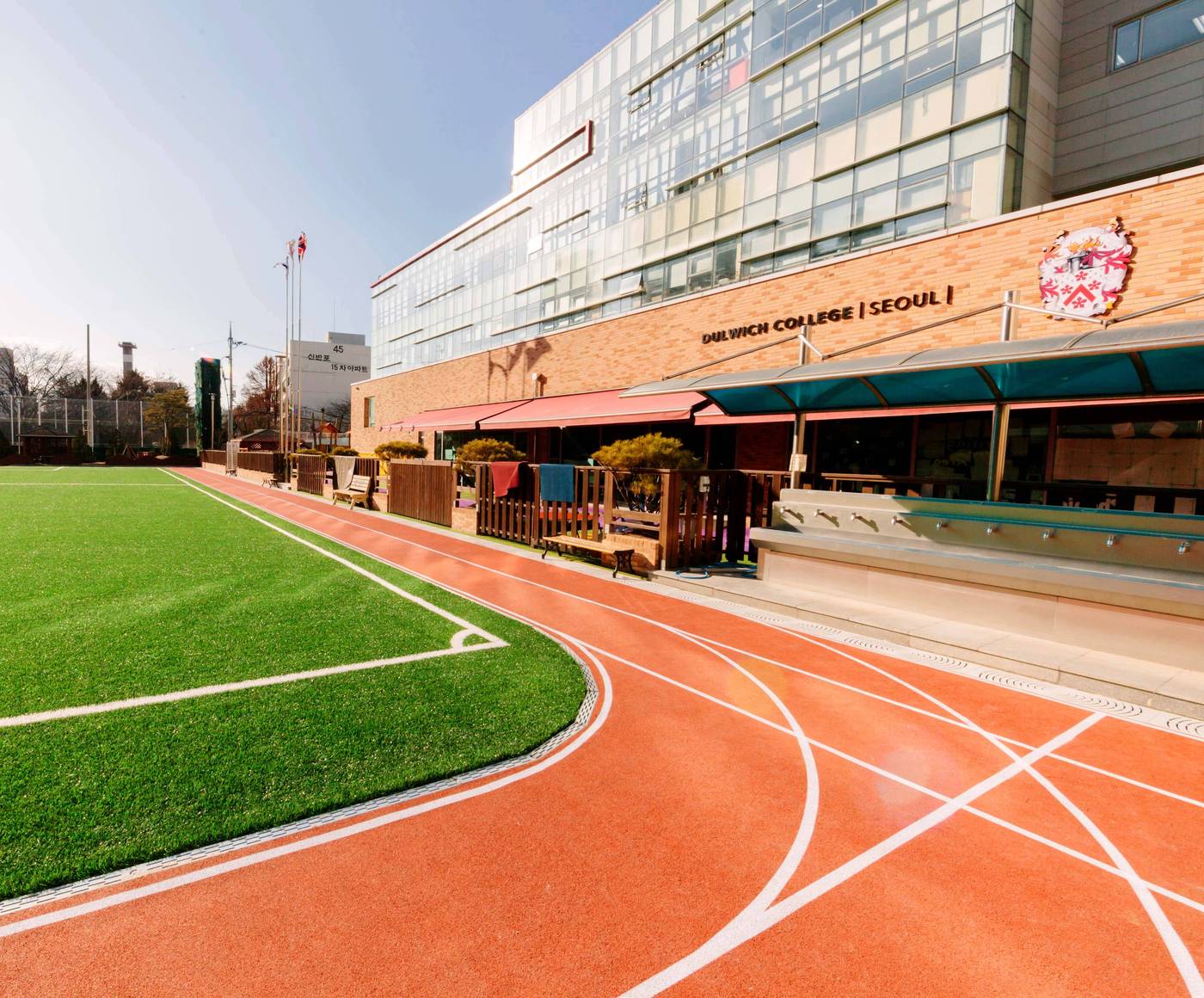
Follow the English National Curriculum leading to IGCSEs and A-Levels. Dulwich College Seoul and Seoul Foreign British School are the primary options in Seoul.
International Baccalaureate (IB)
Several schools offer the full IB programme from PYP through to the IB Diploma. IB is widely recognized globally and is a strong choice for families who may relocate again. Branksome Hall Asia (Jeju) and Chadwick International offer IB pathways.
Canadian Curriculum
A smaller number of schools follow provincial Canadian curricula. These are a good fit for families planning to return to Canada or attend Canadian universities.
Australian Curriculum
Limited availability in Korea, but some schools incorporate Australian standards. Useful for families with ties to Australia or New Zealand.
Christian / Faith-Based
Several international schools in Korea have a Christian foundation. Yongsan International School of Seoul (YISS) is a well-known example. These schools integrate faith-based values into their curriculum while maintaining strong academic standards.
Top international schools in Seoul
| School | Curriculum | Grades | Tuition (USD/yr) |
|---|---|---|---|
| Seoul International School (SIS) | American, AP | PreK-12 | $25,000-$35,000 |
| Korea International School (KIS) | American, AP | PreK-12 | $24,000-$32,000 |
| Seoul Foreign School (SFS) | American, AP, IB | PreK-12 | $28,000-$38,000 |
| Dulwich College Seoul | British, IGCSE, IB | Toddler-13 | $22,000-$36,000 |
| Yongsan International School of Seoul (YISS) | American, Christian | PreK-12 | $18,000-$26,000 |
Tuition figures are approximate for the 2025-2026 academic year and vary by grade level. Contact schools directly for current fee schedules.
Annual tuition by curriculum type (USD)
Source: School fee schedules, 2025-2026
Schools outside Seoul
Families relocating outside Seoul still have access to well-regarded international schools. Jeju, in particular, has become a destination for international education with its purpose-built Global Education City.
| School | Location | Curriculum | Tuition (USD/yr) |
|---|---|---|---|
| Chadwick International | Songdo, Incheon | American, IB | $28,000-$40,000 |
| Branksome Hall Asia | Jeju | IB (PYP, MYP, DP) | $30,000-$45,000 |
| North London Collegiate School Jeju | Jeju | British, IB | $30,000-$48,000 |
| St. Johnsbury Academy Jeju | Jeju | American, AP | $25,000-$38,000 |
| Busan International Foreign School | Busan | American, AP | $15,000-$22,000 |
| Daegu International School | Daegu | American | $15,000-$20,000 |
Jeju Global Education City: Jeju's dedicated international school zone includes Branksome Hall Asia, North London Collegiate School Jeju, and St. Johnsbury Academy Jeju. These schools offer boarding options, making Jeju a popular choice even for families based in Seoul who want a boarding school experience.
Admissions process
International school admissions in Korea are competitive, especially at top-tier Seoul schools. Planning ahead is essential.
Research and shortlist (6-12 months before)
Visit school websites, attend open houses (typically October-November), and compare curricula. Consider location, campus facilities, and your child's learning needs.
Submit applications (November-January)
Most schools open applications in November for the following September. You will need transcripts, teacher recommendations, a student essay or interview (for older students), and a non-refundable application fee (typically 200,000-500,000 KRW).
Testing and interviews (January-March)
Schools may require entrance tests (MAP, ISEE, or their own assessments), English proficiency tests, and student interviews. Some schools also interview parents.
Offers and enrollment (February-April)
Admissions decisions typically arrive in February or March. Accepted students must confirm enrollment and pay a deposit (often the registration fee) within 2-4 weeks to secure their spot.
Pre-arrival preparation (April-August)
Complete medical forms, uniform orders, and orientation paperwork. Many schools hold new family orientation sessions in August before the September start.
Important: Top schools like SFS and SIS have waitlists that can stretch for years at certain grade levels. If you know you are relocating to Korea, contact schools as early as possible. Some families apply 1-2 years in advance.
Costs breakdown
International school costs in Korea extend well beyond tuition. Here is a realistic picture of what to budget for.
| Cost Category | Typical Range | Frequency |
|---|---|---|
| Tuition | $15,000-$65,000 | Per year |
| Registration / Enrollment Fee | 3,000,000-10,000,000 KRW | One-time |
| Development / Capital Levy | 2,000,000-8,000,000 KRW | One-time (refundable at some schools) |
| School Bus | 2,000,000-5,000,000 KRW | Per year |
| Uniforms | 500,000-1,500,000 KRW | Initial purchase |
| Extracurriculars / After-School | 500,000-3,000,000 KRW | Per semester |
| School Lunch | 1,000,000-2,500,000 KRW | Per year |
| Boarding (Jeju schools) | $10,000-$20,000 | Per year |
Total first-year costs (tuition + registration + uniforms + transport) can easily exceed $40,000-$80,000 per child at premium schools.
Employer education subsidies
Education subsidies are one of the most significant components of corporate expat packages in Korea. If you are relocating through an employer, this can make a major difference in your school choice.
Common subsidy structures
- •Full tuition coverage: Common for senior-level corporate transfers and diplomatic postings. The employer pays tuition directly to the school.
- •Capped annual allowance: Many companies provide a fixed education allowance (e.g., $20,000-$30,000 per child per year). You pay the difference if you choose a more expensive school.
- •Partial reimbursement: Some employers cover a percentage (typically 50-80%) of tuition. Registration and ancillary fees are usually not included.
- •No subsidy: Common for locally hired expats, entrepreneurs, and freelancers. In this case, consider schools outside Seoul or Korean public schools to manage costs.
Tip: Negotiate education benefits before accepting a relocation offer. Tuition costs in Korea are among the highest in Asia, and the difference between full coverage and no coverage can be $30,000-$60,000 per year per child.
Korean public school option
Foreign children with a valid visa can attend Korean public schools for free. This is an option worth considering for families on a budget or those who want their children to become fluent in Korean.
What to know
- •All instruction is in Korean. There is no ESL support at most schools, though some districts offer Korean language classes for multicultural students (다문화 학생).
- •Enroll through your local district education office (교육청). Bring your passport, ARC, proof of address, and your child's previous school records (translated into Korean).
- •The academic calendar runs March to February, not September to June.
- •Public school culture is very different from international schools. Expect longer hours, more emphasis on testing, and a hierarchical classroom structure.
- •School lunches are provided and are either free or very low cost. Quality is generally excellent.
Homeschooling
Homeschooling is not explicitly regulated in South Korea for foreign residents. Korean compulsory education laws apply to Korean nationals, not to foreign children on dependent visas. This means foreign families can legally homeschool without registering with Korean authorities.
Practical considerations
- •Many expat families use accredited online programs (e.g., Connections Academy, K12, or Oak Meadow) combined with local co-ops and tutoring.
- •Seoul has a small but active homeschooling community with regular meetups and shared activities.
- •Keep thorough records and portfolios. If your child returns to a formal school system, they will need to demonstrate grade-level work.
- •Homeschooled students may face challenges with socialization. Supplement with Korean language classes, sports, and community programs.
Frequently asked questions
Can Korean nationals attend international schools?
What if we arrive mid-year?
Do international schools offer scholarships?
Is the school calendar different from Western countries?
How do I choose between American and IB curriculum?
Are there special needs or learning support services?
What about after-school hagwon (tutoring)?
Advertisement
Google Ads placement (728x90)