
Bringing a dog or cat to Korea is absolutely doable, but the paperwork is unforgiving. Miss one step, get one date wrong, and your pet could end up in quarantine for up to 180 days. I have seen it happen to people who thought they had everything figured out.
This guide walks through every step, every cost, and every gotcha. If you follow this timeline exactly, your pet walks off the plane and goes straight home with you. No quarantine.
Step 1: Microchip (Do This First)
Your pet needs an ISO 15-digit microchip (ISO 11784/11785 compliant). This is the international standard. Most microchips implanted in the US, Canada, and Europe meet this standard, but verify with your vet.
Critical detail: The microchip must be implanted BEFORE the rabies vaccination. If your pet already has a microchip and a current rabies shot, you are fine. But if you need a new chip, get it before the next rabies vaccine. Korea requires proof that the chip was present when the rabies vaccine was administered.
Cost: $40-75 at most vets. Some shelters do it for free.
Step 2: Rabies Vaccination
Your pet needs a current rabies vaccination. If they already have one that will still be valid on your arrival date, you can use it. If not, get a new one after the microchip is in.
The vaccine must be administered at least 30 days before the FAVN blood test (next step). The timing chain here is critical, so write down every date.
Step 3: FAVN Rabies Titer Test
This is the step that catches most people off guard. The FAVN (Fluorescent Antibody Virus Neutralization) test is a blood test that proves your pet has adequate rabies antibodies. It must be done at a lab approved by Korea's Animal and Plant Quarantine Agency.
In the US, the approved lab is the Kansas State University Rabies Laboratory. Your vet draws the blood and ships it to KSU. Results take about 2-3 weeks.
The waiting period: After you receive a passing FAVN result (titer must be 0.5 IU/ml or higher), you must wait at least 3 months before your pet can enter Korea. This waiting period is non-negotiable. It is why you need to start 4+ months before travel.
Cost: $100-150 for the test, plus your vet's blood draw fee ($50-100) and shipping ($30-50).
Step 4: USDA Health Certificate
Within 10 days of your flight, you need a USDA-endorsed international health certificate (APHIS 7001 form). This is a two-step process:
- Your vet examines your pet and completes the health certificate.
- You submit the certificate to your nearest USDA APHIS Veterinary Services office for endorsement.
Some USDA offices require appointments weeks in advance. Do not wait until the last minute. Check your local office's turnaround time early in the process.
Cost: Vet exam ($50-100) + USDA endorsement fee ($38).
If you are coming from the EU, the process is similar but uses EU pet passports and your national veterinary authority's endorsement instead of USDA.
Total Cost Breakdown
Here is what the paperwork alone costs, minimum:
- Microchip: $40-75
- Rabies vaccine: $20-40
- FAVN test + blood draw + shipping: $180-300
- USDA health certificate: $88-138
- Subtotal (paperwork): ~$355 minimum
Now add the airline:
- In-cabin (small pets): $125-250 each way, depending on airline
- Cargo (larger pets): $500-2,000+ depending on size, route, and airline
- Pet relocation service (hands-off): $3,000-15,000
If you handle everything yourself with an in-cabin pet, expect to spend around $500-700 total. If you are shipping a large dog via cargo and using a relocation service, it can easily hit $5,000-15,000.
Airline Pet Policies
Not all airlines flying to Korea accept pets, and policies change frequently. As of 2026:
- Korean Air: Allows in-cabin pets (under 7kg including carrier). Also offers checked pet luggage and cargo. One of the most pet-friendly airlines for this route.
- Asiana: Similar to Korean Air. In-cabin for small pets, cargo for larger ones.
- United: In-cabin only for small pets. No checked pets on transpacific flights. Large dogs must go through PetSafe cargo program (limited availability).
- Delta: In-cabin for small pets. Cargo through Delta Cargo for larger animals.
Book your pet's spot when you book your ticket. Airlines limit the number of in-cabin pets per flight (usually 2-4). Waiting means getting shut out.
Quarantine: How to Avoid It
If all your paperwork is complete and correct, your pet clears quarantine inspection at the airport and goes home with you the same day. The inspection takes about 30-60 minutes. They check the microchip, review documents, and confirm the FAVN results.
If something is wrong (expired FAVN, missing health certificate, microchip mismatch), your pet goes into government quarantine. The cost is $20-60 per day depending on the facility and animal size. Quarantine can last up to 180 days in the worst case.
I cannot stress this enough: triple-check every document, every date, every number before you fly. Have your vet review everything one final time. The heartbreak of watching your pet go into quarantine because of a paperwork error is something you can avoid entirely.
Life with Pets in Korea
Pet-Friendly Apartments
Finding pet-friendly housing in Korea is harder than it should be. Many landlords do not allow pets, and those who do often restrict size (small dogs only, no cats, etc.). Villas and officetels are generally more flexible than large apartment complexes (아파트), where building-wide pet rules apply.
When apartment hunting, ask specifically about pet policies before viewing. Use the Korean phrase “반려동물 가능한가요?” (ban-ryeo-dong-mul ga-neung-han-ga-yo, “are companion animals allowed?”). Some landlords will negotiate a higher deposit for pets.
English-Friendly Vets
Seoul has several vet clinics with English-speaking staff. Itaewon Animal Clinic and MyPet Clinic in Gangnam are two well-known options. Outside Seoul, finding English-speaking vets is much harder. Google reviews with the term “English” are your best filter.
Vet costs in Korea are reasonable compared to the US. A routine checkup runs 30,000-50,000 KRW ($22-37). Vaccinations are 20,000-40,000 KRW each. Emergency care varies widely but is generally 30-50% cheaper than equivalent US prices.
Dog Culture in Korea
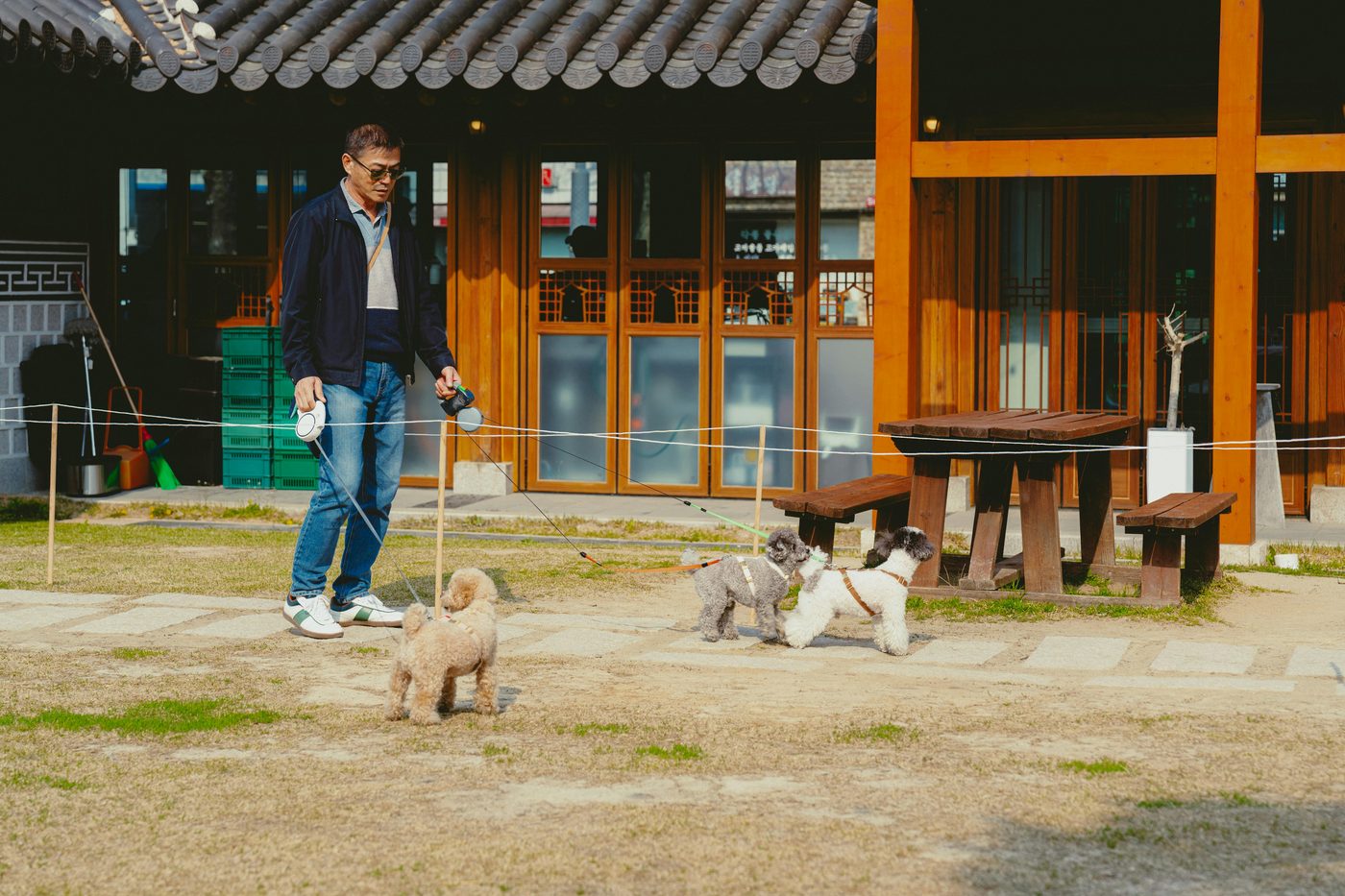
Korea's relationship with dogs has shifted dramatically. Pet cafes are everywhere, dog parks are expanding, and pet supply stores rival the selection in any Western country. Dog-friendly cafes and restaurants are common in trendy neighborhoods like Yeonnam-dong, Seongsu, and Hannam.
That said, leash laws are loosely enforced, and you will encounter off-leash dogs in parks. Socialization norms differ from Western countries. Not everyone grew up around pets, so be patient with people who seem nervous around your dog.
Quick Checklist
- ☐ ISO 15-digit microchip implanted
- ☐ Rabies vaccination (after microchip)
- ☐ FAVN test completed (30+ days after rabies vaccine)
- ☐ FAVN result: 0.5 IU/ml or higher
- ☐ 3-month waiting period from FAVN blood draw date
- ☐ Airline pet reservation confirmed
- ☐ USDA health certificate (within 10 days of flight)
- ☐ All documents printed and in carry-on (do not check them)
- ☐ Pet-friendly housing confirmed at destination
The Bottom Line
Bringing your pet to Korea is a logistical project, not a casual decision. Start early, follow the timeline exactly, and do not cut corners on paperwork. The 4-5 months of preparation are worth it when your dog or cat walks through Incheon Airport and goes straight home with you.