Most visitors to Korea treat Busan as a day trip from Seoul. Take the morning KTX, see a beach, eat some fish, take the evening train back. That is a mistake. Busan is a different Korea. The accent is different, the food is different, the energy is different. People here are louder, friendlier, and more direct than in Seoul. The city sits between mountains and the sea, and that geography shapes everything.
Give Busan at least two nights. Three is better. Here is how to make the most of it.
Getting There
The KTX (Korea's high-speed train) runs from Seoul Station or Suseo Station to Busan Station. The ride is 2 hours and 15 minutes. Tickets cost 59,800 KRW for a standard seat. Book on the Korail app or website. Weekend trains sell out, so book a few days ahead.
If you are flexible on timing, the SRT from Suseo Station is sometimes cheaper (53,000-59,000 KRW) and just as fast. Budget airlines (Jin Air, Jeju Air, T'way) fly Seoul Gimpo to Busan Gimhae in about an hour, and if you book early, flights can be 40,000-60,000 KRW. But once you add airport time, the KTX is more convenient.
Haeundae: The Famous Beach
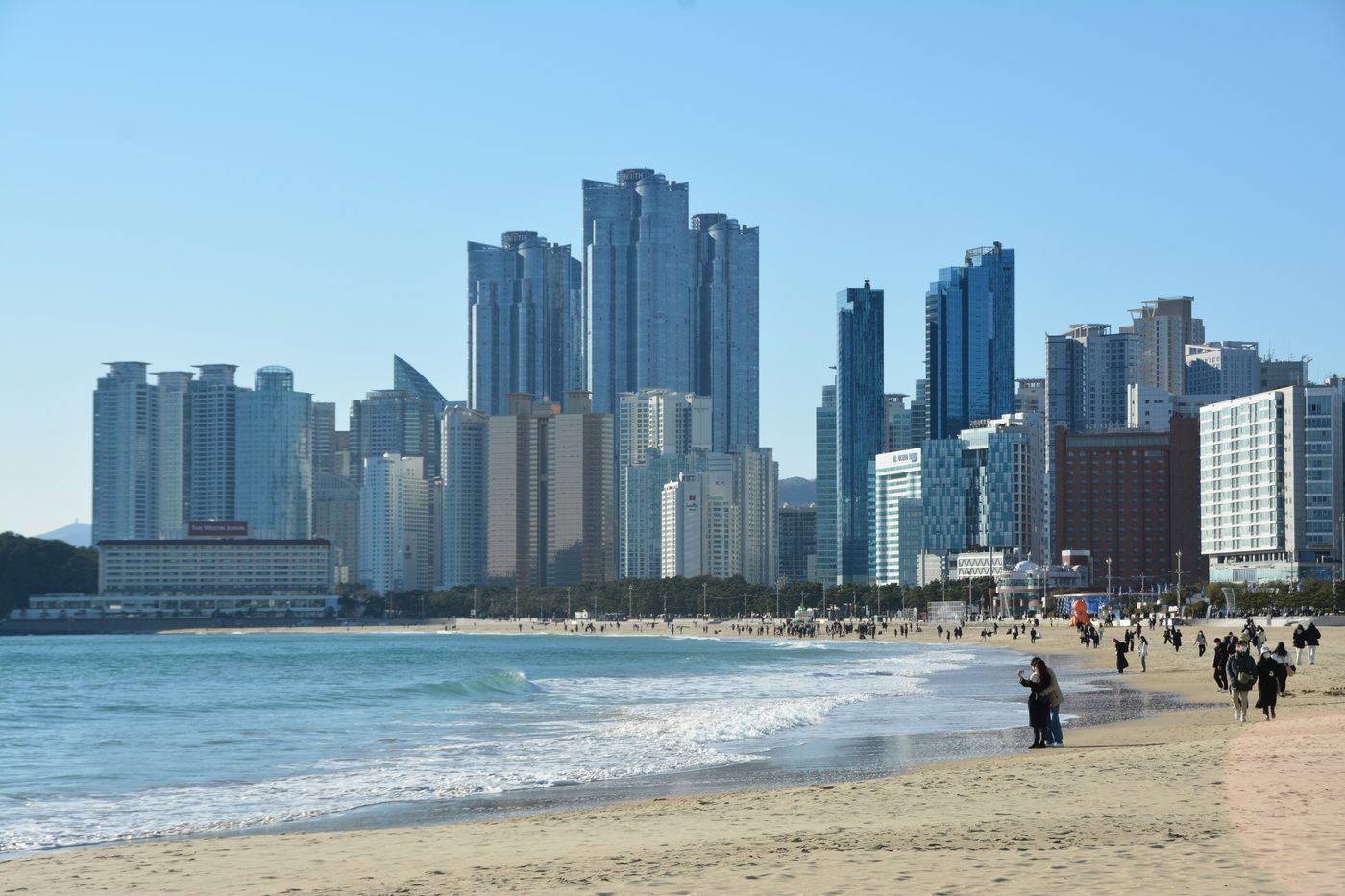
Haeundae is the beach you have seen in every Korea photo. A wide crescent of sand backed by high-rises, seafood restaurants, and the Busan Aquarium. In summer (July-August), it is packed shoulder to shoulder. Outside of summer, it is a pleasant walk with far fewer people.
The honest take: Haeundae is fine. The beach itself is nice but not exceptional by global standards. What makes it worth visiting is the atmosphere. The night market along the seafront runs year-round, the seafood is fresh, and watching the sun set over the ocean from one of the cafes along the strip is a good way to start your first evening.
Walk east along the Haeparang Trail from Haeundae to Dalmaji Hill. The coastal path takes about 30 minutes and offers views that are significantly better than the beach itself. The cafes perched on Dalmaji Hill are some of the best in Busan.
Watch
Haeundae Beach in 60 seconds
Gamcheon Culture Village
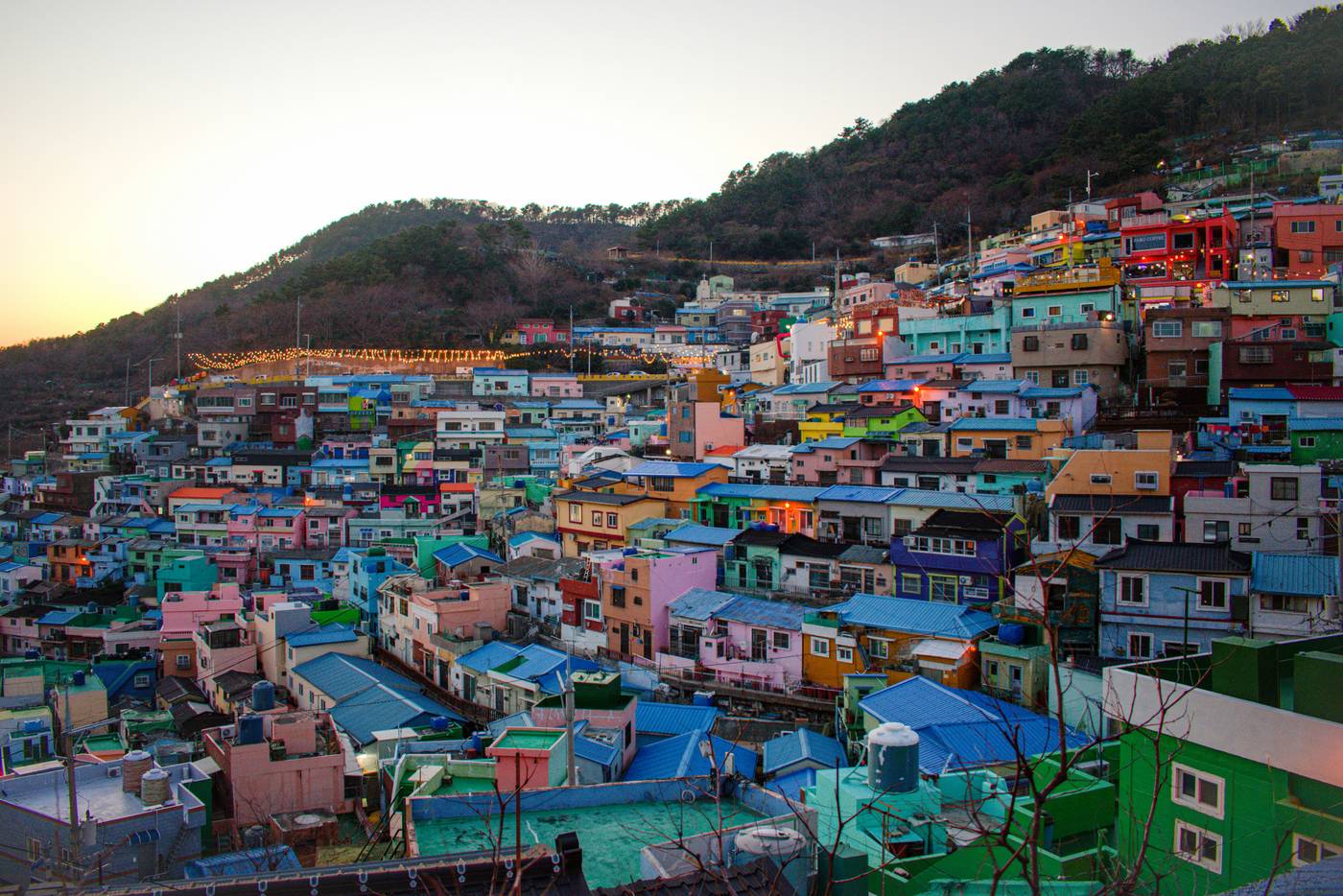
A hillside neighborhood of brightly painted houses stacked on top of each other, Gamcheon is often called “the Santorini of Korea.” That comparison oversells it. Gamcheon is a former refugee settlement from the Korean War that was revitalized with art installations and murals.
It is photogenic and worth an hour or two. Buy the stamp map (2,000 KRW) at the entrance and follow the trail through the narrow alleys. But be aware: this is a residential neighborhood with real people living in these houses. The best time to visit is morning before the tour buses arrive. By noon, the main alleys are congested and the charm fades.
Jagalchi Fish Market
The largest fish market in Korea. The ground floor is a wet market where vendors sell every type of seafood you can imagine, and several you cannot. Octopus, sea squirts, abalone, crabs, eels. You pick your fish from a tank and they prepare it on the spot.
Head to the second floor for sit-down sashimi restaurants. A plate of fresh hoe (Korean-style sashimi) runs 20,000-40,000 KRW depending on the fish and serving size. It comes with a dozen side dishes and a spicy fish stew made from the bones. The quality-to-price ratio is excellent. This is not tourist sashimi. This is the real thing.
Check Woongie for the highest-rated vendors. Not all stalls are equal, and a few are known for overcharging tourists.
Gwangalli Beach and the Bridge
The locals' beach. Gwangalli is smaller and less famous than Haeundae, but many Busan residents prefer it. The reason is the view: the Gwangan Bridge, a 7.4-kilometer suspension bridge, stretches across the bay and lights up at night in changing colors.
The strip of restaurants and bars along Gwangalli Beach is where young Busan goes out. Grab a table at one of the seafood places facing the water, order a plate of grilled shellfish and a bottle of soju, and watch the bridge lights. Friday and Saturday nights in summer, the atmosphere here is better than anything in Haeundae.
Haedong Yonggungsa Temple
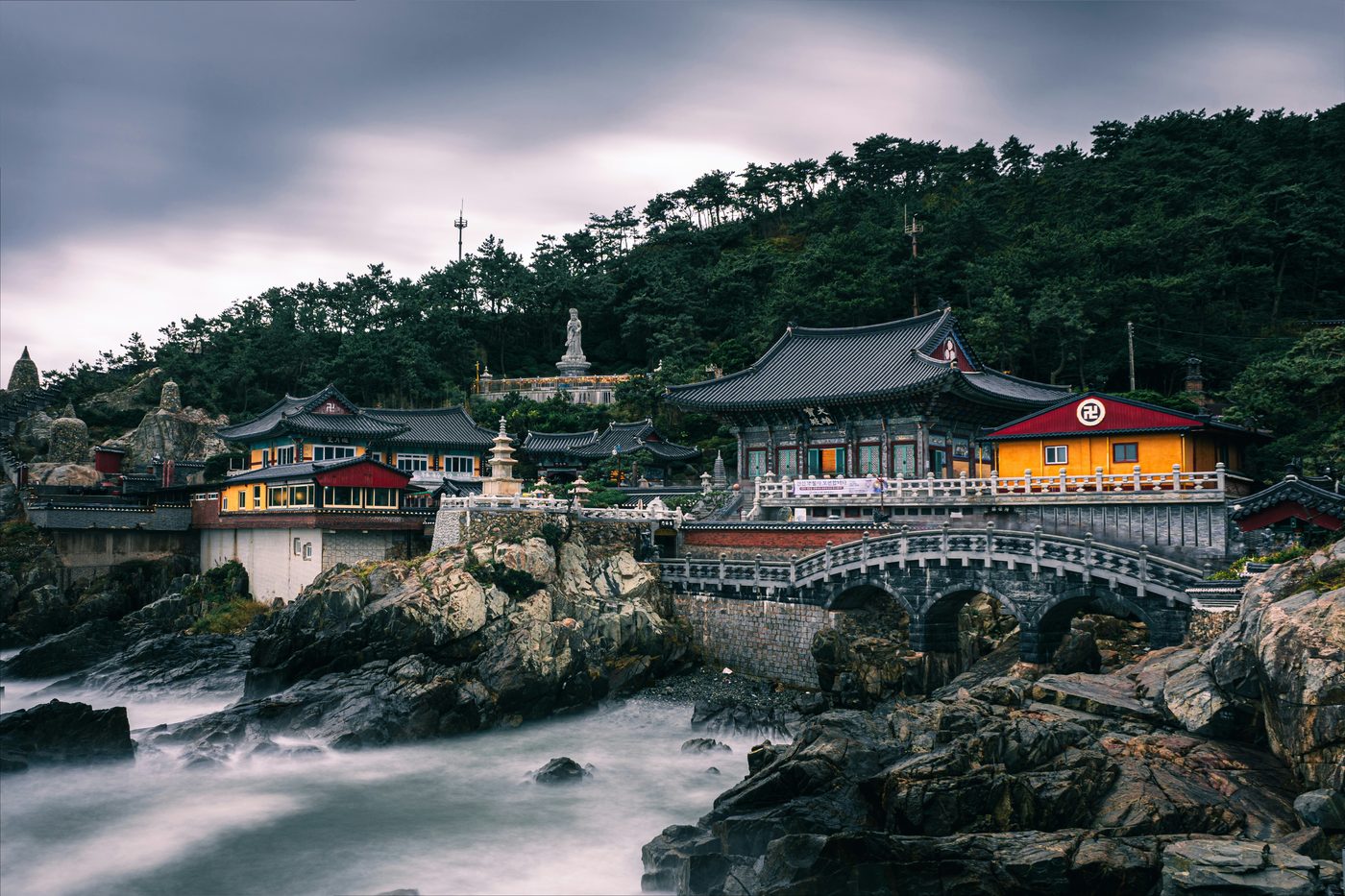
Most Korean temples sit in the mountains. This one sits on the ocean. Haedong Yonggungsa is built into the cliffs on the northeastern coast of Busan, and it is one of the most dramatic temple settings in the country. The walk down the stone stairway to the main hall, with waves crashing below, is worth the trip alone.
Get there early (before 9 AM) or late afternoon. Midday, the parking lot fills up and the stairway becomes a bottleneck. Admission is free. Take bus 181 from Haeundae (about 30 minutes).
The Food
Busan has its own food identity, separate from Seoul. Three dishes you have to try:
Milmyeon
Cold wheat noodles in a tangy broth. This is Busan's version of naengmyeon (cold buckwheat noodles), but with a chewier noodle and a sharper, more vinegary kick. A bowl costs 7,000-9,000 KRW and it is the perfect lunch on a warm day. Gukje Milmyeon near Bupyeong Market is the classic spot.
Dwaeji Gukbap
Pork bone soup with rice. This is Busan's comfort food, eaten at any hour. The broth is milky white from hours of simmering pork bones, served with scallions, salted shrimp paste on the side, and a bowl of rice to dump in. A meal costs 8,000-10,000 KRW. Ssanggung Dwaeji Gukbap in Seomyeon has been serving it since the 1970s.
Ssiat Hotteok
A Busan-specific street food. Regular hotteok (sweet pancake) is filled with brown sugar. Busan's version is filled with seeds and nuts, pressed flat and crispy, and served in a paper cup. The BIFF Square stalls near Nampodong station are the most famous (1,500-2,000 KRW each). There will be a line. It moves fast. Worth the wait.
For more restaurant recommendations in Busan, Woongie covers the city with local reviews.
Watch
Busan street food you have to try
Seomyeon: Nightlife
Seomyeon is Busan's nightlife center. It is not as sprawling as Hongdae in Seoul, but it is concentrated and lively. The streets around Seomyeon Station (Lines 1 and 2 intersection) fill up after 9 PM with restaurant-goers, bar-hoppers, and the under-30 crowd heading to noraebang (karaoke rooms).
The area is also a good base for accommodation. Hotels in Seomyeon are cheaper than Haeundae (60,000-120,000 KRW/night), the subway access is central, and you are surrounded by food options at every price level.
When to Go
Best months: May, June, September, October. Warm enough for the beach but not the humid crush of peak summer.
Summer (July-August): Hot, humid, crowded. Haeundae is a zoo. But the energy is high and the beach festivals are fun if you do not mind crowds.
Winter (December-February): Busan is milder than Seoul. Temperatures hover around 2-8 degrees Celsius. The seafood is still excellent and the tourist crowds disappear. A good time for a quieter, food-focused trip.
Cherry blossom season (late March-early April):The cherry blossoms in Busan bloom about a week before Seoul. Samnak Ecological Park along the Nakdong River is one of Korea's best spots.
A 2-Day Busan Itinerary
Day 1
- Morning: Arrive on the KTX, check in. Head to Gamcheon Culture Village (allow 1.5-2 hours).
- Lunch: Jagalchi Fish Market for fresh sashimi.
- Afternoon: Walk through Nampodong, grab ssiat hotteok at BIFF Square, browse Gukje Market.
- Evening: Gwangalli Beach for dinner with a bridge view.
Day 2
- Morning: Haedong Yonggungsa Temple (get there by 9 AM).
- Lunch: Milmyeon or dwaeji gukbap in Seomyeon.
- Afternoon: Haeundae Beach, walk to Dalmaji Hill, cafe stop.
- Evening: Seomyeon for nightlife, or catch the KTX back to Seoul.