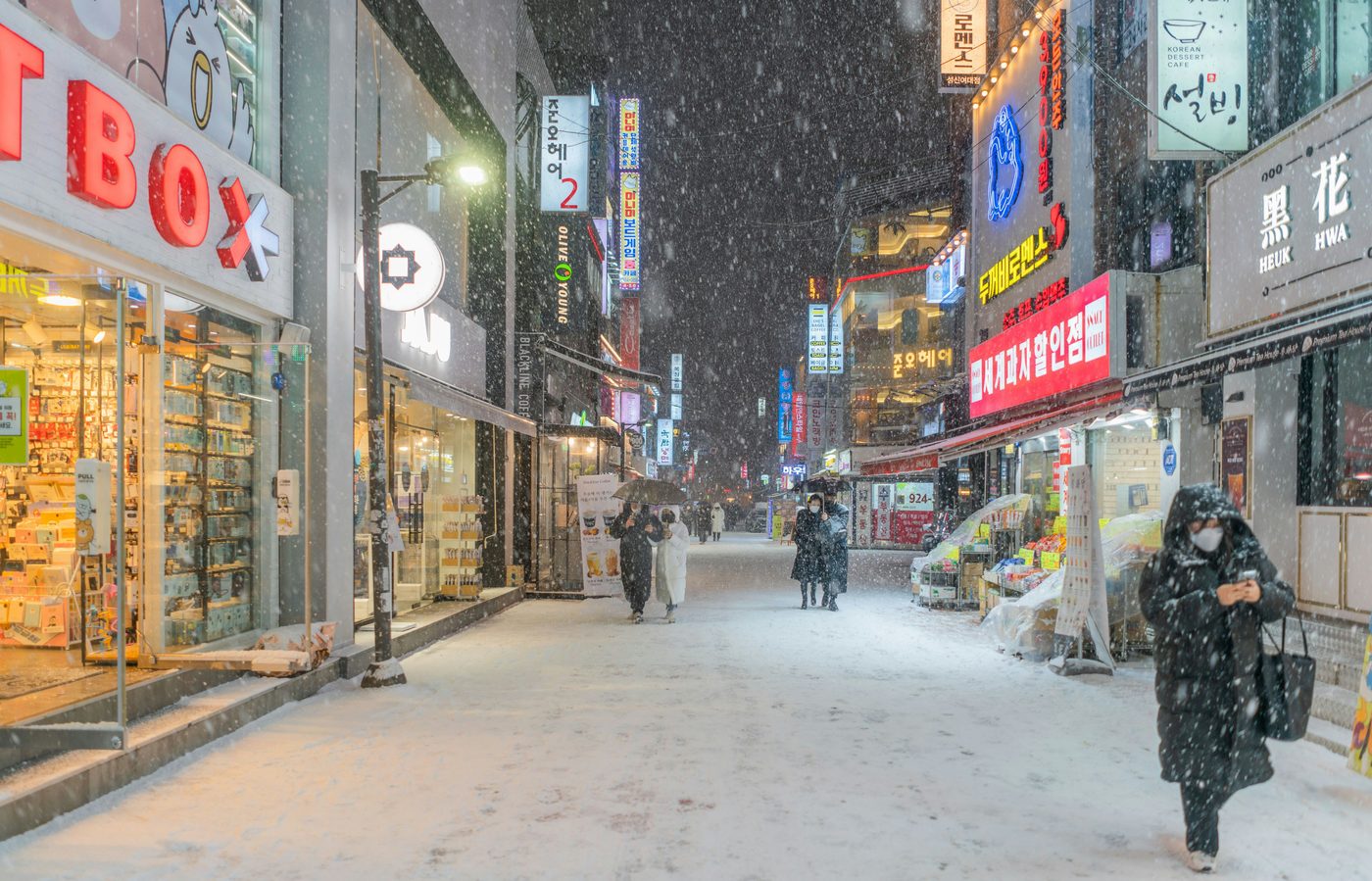
Korean winters are no joke. I moved here thinking my New York winters had prepared me. They had not. Seoul in January regularly hits -10 to -15C (5 to 14F), and the wind off the Han River makes it feel worse. The air is dry, the sky is gray, and if you are not dressed properly, you will spend your trip hiding in heated cafes.
But here is the thing: Korea in winter is genuinely great if you plan for it. The ski resorts are surprisingly good and close to Seoul. The festivals are wild (you can catch fish with your bare hands on a frozen river). And Korean winter food exists specifically to make you forget how cold you are.
Ski Resorts Near Seoul
Vivaldi Park (Hongcheon)
This is the most popular resort for Seoul residents because it is only about 90 minutes away by car or shuttle bus. Vivaldi has 12 slopes across beginner to advanced levels, and it stays open until 3 AM for night skiing. The night sessions are actually the best part because the crowds thin out and the slopes are well-lit.
Lift tickets run about 60,000 to 80,000 KRW for a half-day session. Full equipment rental (skis or snowboard, boots, poles) is 30,000 to 40,000 KRW. Total cost for a day trip: roughly 100,000 to 130,000 KRW including transport.
The resort also has Ocean World (an indoor water park) attached to it, which is a bizarre but fun combo if you are traveling with kids or just want something different.
High1 Resort (Jeongseon)
If you want better snow and more serious slopes, High1 is the move. It is about 3 hours from Seoul (take the KTX to Gohan station, then a shuttle). The resort sits at a higher elevation, so the snow quality is noticeably better than the resorts closer to Seoul. 18 slopes, including some genuinely challenging runs.
High1 also has a casino (the only one in Korea where Korean citizens can gamble), which adds an interesting after-ski option. Lift tickets are similar to Vivaldi, around 65,000 to 85,000 KRW.
Alpensia and Yongpyong (Pyeongchang)
These are the 2018 Winter Olympics venues. Yongpyong is the larger of the two with 28 slopes and the best infrastructure in the country. Alpensia is smaller but has a ski jump tower you can visit and a more resort-like atmosphere.
Both are about 2.5 hours from Seoul. Yongpyong lift tickets are 72,000 to 92,000 KRW. If you are a serious skier, this is the best option in Korea. If you are a beginner, Vivaldi is cheaper and closer.
Hwacheon Ice Fishing Festival (January)
This is hands-down the most uniquely Korean winter experience. Every January, the small town of Hwacheon (about 2.5 hours northeast of Seoul) freezes over the Hwacheon River and drills thousands of holes in the ice. Then over a million visitors come to catch trout with their bare hands.
Yes, you stick your hands into icy water and grab live fish. It is chaotic, hilarious, and freezing. They also set up regular fishing holes where you use a line through the ice (less dramatic but warmer). The fish you catch gets cooked on-site as sashimi or grilled.
The festival usually runs for about three weeks in January. Entry is 10,000 to 15,000 KRW. Ice fishing equipment rental is included. There are also ice sledding tracks, ice sculptures, and food vendors everywhere.
Getting there: Take a bus from Seoul's Dong Seoul Terminal to Hwacheon (about 2.5 hours, 15,000 KRW one way). During the festival, there are special shuttle services.
Seoul in Winter
Lotte World Ice Skating
The outdoor ice rink at Lotte World (Jamsil) is open from December through February. Admission including skate rental is about 15,000 KRW. It is right next to Seokchon Lake, which is beautiful when dusted with snow. Way less crowded than the old City Hall rink used to be.
Han River Winter Walks
The Han River parks are a different experience in winter. Fewer people, cleaner air, and on clear days the views of the frozen river with the city skyline behind it are genuinely impressive. Yeouido Hangang Park is the most accessible. Bundle up, grab a hot drink from a convenience store, and walk for 30 minutes. That is all you need.
Starfield Library (COEX Mall)
When it gets too cold outside (and it will), COEX Mall in Gangnam is the perfect escape. The Starfield Library is free, warm, and photogenic. Grab a book, sit in a chair, and warm up. The mall also has a massive food court if you need to refuel.
Jjimjilbangs
Korean spas are always good, but in winter they become essential. The heated rooms, hot pools, and sauna areas are the ultimate antidote to a freezing day outside. Dragon Hill Spa in Yongsan (12,000 KRW entry) or Siloam Sauna near Seoul Station are both open 24 hours. You can literally spend a whole afternoon thawing out.
Winter Food
Korean cuisine was basically designed for winter. Here is what to eat when the temperature drops:
Army stew (budae jjigae)
A bubbling pot of ramen, spam, kimchi, sausage, cheese, and whatever else fits in there. It sounds chaotic and it is. A pot for two costs 12,000 to 18,000 KRW. Eat it at Nolboo Budae Jjigae or any of the restaurants near Uijeongbu (the dish's hometown).
Kimchi jjigae
The classic Korean stew. Fermented kimchi, pork belly, tofu, and red chili in a stone pot that stays boiling for 10 minutes after it hits your table. 8,000 to 10,000 KRW at most Korean restaurants. This is the meal that every Korean eats when it is cold. For good reason.
Street food
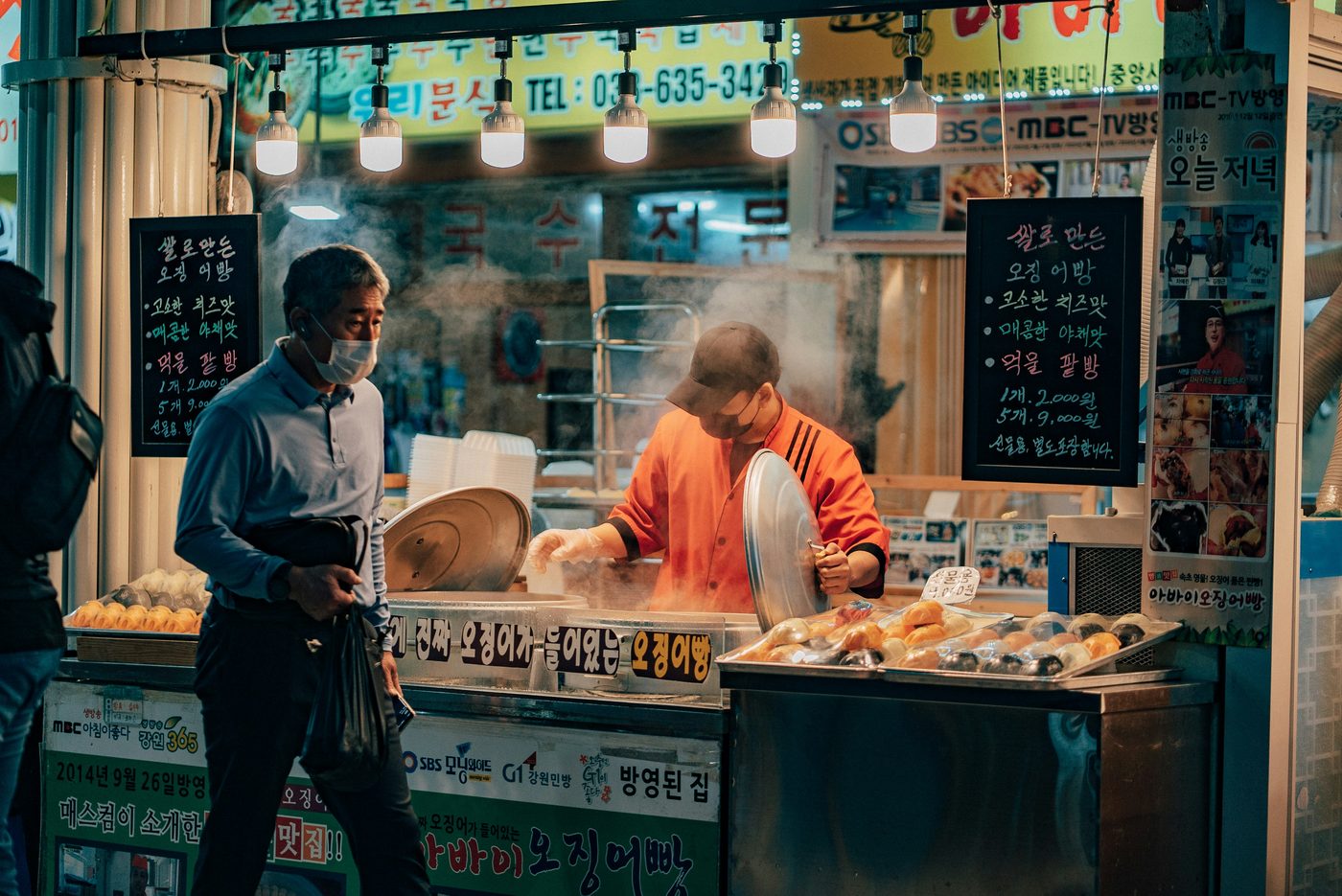
Roasted chestnuts (2,000 KRW a bag), bungeoppang (fish-shaped pastry filled with sweet red bean, 1,000 to 2,000 KRW for 3), hotteok (sweet pancake with brown sugar filling, 1,500 KRW), and tteokbokki (spicy rice cakes, 3,000 to 4,000 KRW). Street vendors pop up everywhere in winter and the warm food in your cold hands is half the experience.
Use Woongie to find the best stew restaurants and street food areas near you.
Packing for Korean Winter
Do not underestimate the cold. Korea is dry-cold with wind, which means it feels worse than the thermometer suggests.
- A serious down jacket. Not a fashion puffer. A real one rated for -15C or below. Koreans call this a “padded jacket” (paeding) and every Korean person owns one. You can buy a good one at Uniqlo or any department store for 100,000 to 200,000 KRW if you do not want to pack one.
- Thermal base layers. Heattech from Uniqlo or similar. Wear these under everything.
- A real scarf and gloves. Not decorative ones. Insulated, windproof ones.
- Hand warmers. Korean convenience stores sell disposable hand warmers (hotpack) for 1,000 KRW each. Buy a handful. Koreans stick them in their jacket pockets and inside their shoes.
- Waterproof boots with grip. Streets ice over, subway entrances get slippery, and temple steps become dangerous. Boots with traction are not optional.
Is Winter Worth It?
If you have the option to visit Korea in spring (cherry blossoms) or fall (foliage), those are the most comfortable seasons. But winter has things the other seasons do not: skiing, ice festivals, empty tourist sites, cheaper flights, and the best comfort food on the planet. If you dress properly and plan around the cold instead of fighting it, a winter trip to Korea is absolutely worth it.