Korea drinks more hard liquor per capita than almost any country on earth. That statistic sounds alarming until you spend an evening at a Korean BBQ joint watching a table of coworkers bond over soju, and then it just makes sense. Drinking here is not about getting drunk (though that certainly happens). It is about connection, hierarchy, and shared vulnerability.
Whether you drink or not, understanding Korean alcohol culture is essential. It touches everything from workplace dynamics to dating to how you are perceived as a person. Here is what you need to know.
Soju: The Basics
Soju is a clear spirit that tastes somewhere between vodka and water with a slight sweetness. The classic green bottle (Chamisul, Chum Churum, or Good Day depending on the region) contains 360ml at 16-17% alcohol. That is roughly equivalent to a third of a bottle of wine per bottle of soju.
It costs about 1,500-2,000 KRW in a convenience store and 5,000-6,000 KRW at a restaurant. It is, ounce for ounce, one of the cheapest ways to drink on the planet. This is both a feature and a hazard.
Soju is almost never drunk alone. It accompanies food. Always. The Korean concept of anju (food eaten while drinking) is sacred. Drinking without eating is considered reckless. If you order soju at a restaurant, food is expected on the table.
Pouring Etiquette: The Rules That Matter
This is the part that trips up almost every foreigner. Korean drinking has real etiquette, and getting it right earns you immediate respect.
- Never pour your own drink. Someone else pours for you, and you pour for them. Pouring your own drink signals that nobody cares enough to pour for you, which is socially awkward for everyone.
- Use two hands. When pouring for someone older or senior, hold the bottle with your right hand and support your right forearm or elbow with your left hand. When receiving, hold your glass with two hands.
- Turn away from elders. When drinking in the presence of someone significantly older or senior, turn your body slightly away from them and cover your glass with your hand as you drink. This is a sign of respect. Younger Koreans are relaxing this, but doing it always earns points.
- Do not let someone's glass sit empty. An empty glass is an invitation to refill it. Keep an eye on the people around you.
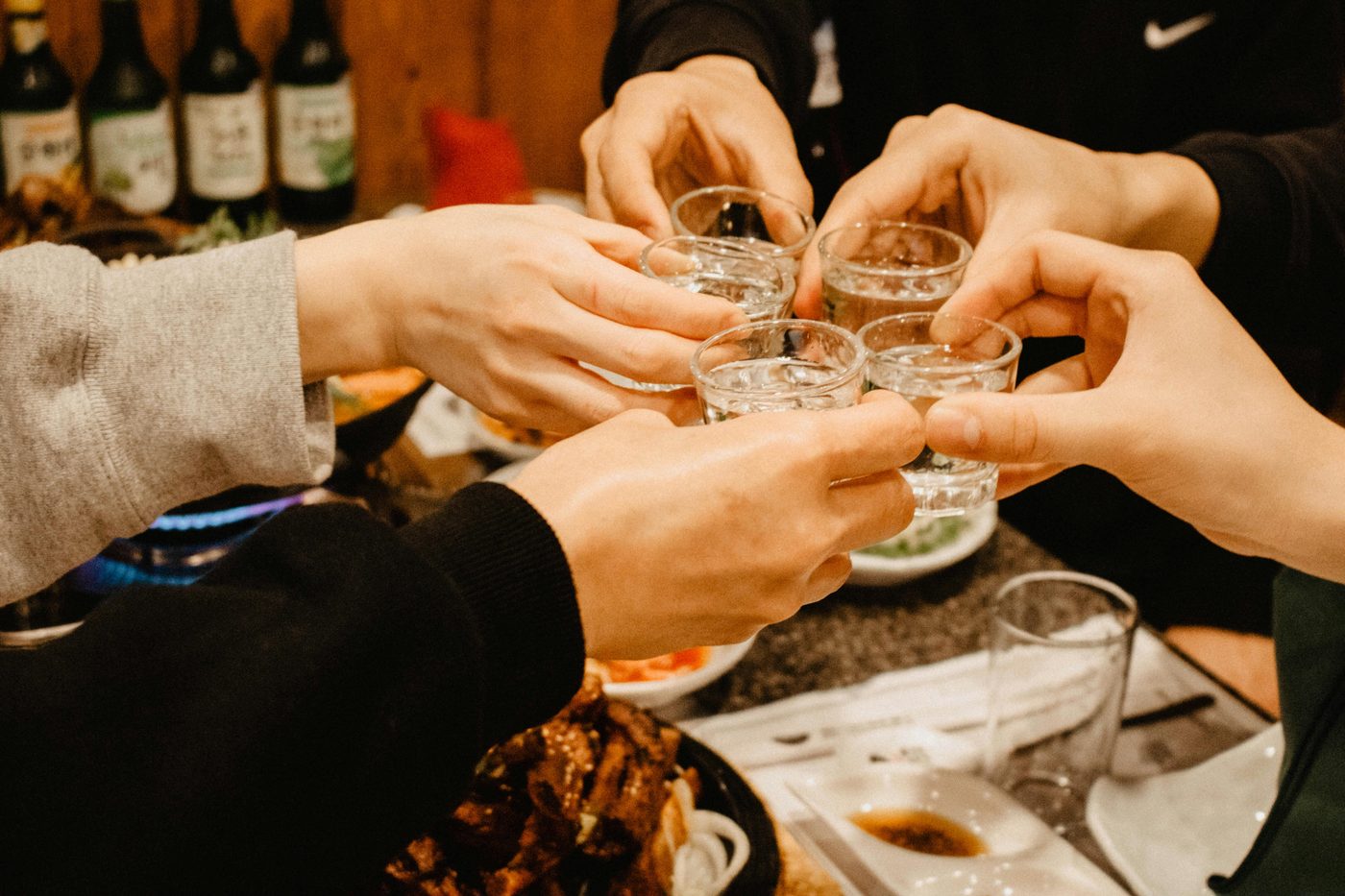
- The first shot is together. When a new bottle opens, the first shot is a group toast. Wait for everyone to be poured and clink glasses before drinking. Lower your glass when clinking with someone older.
Hoesik: The Work Drinking Culture
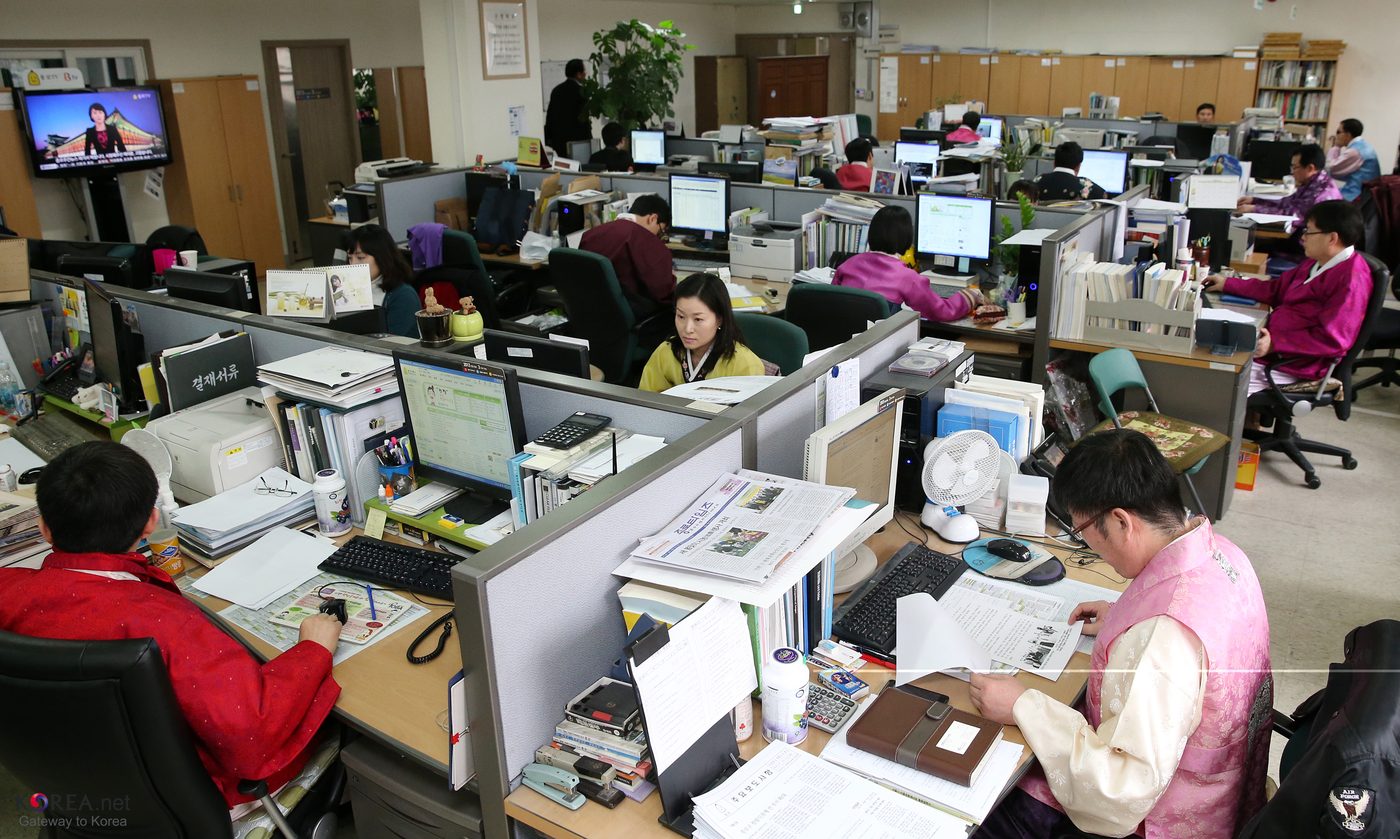
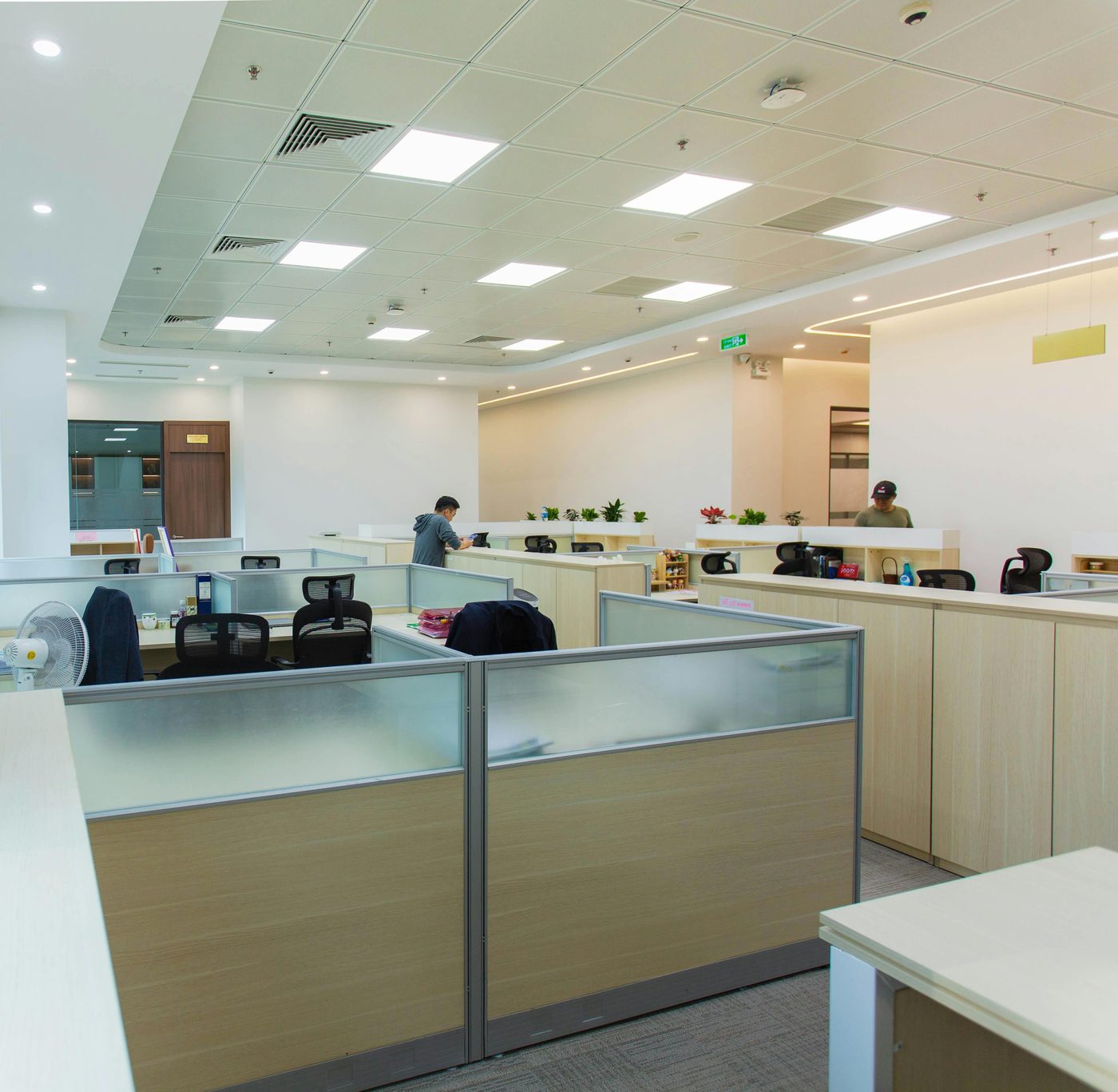
Hoesik (회식) literally means “gathering to eat” but in practice it means company dinners with drinking. In traditional Korean work culture, hoesik attendance was essentially mandatory. Skipping it was career suicide.
In 2026, things are changing. The MZ generation (millennials and Gen Z) is pushing back on forced drinking culture, and many companies have official policies making hoesik voluntary. But “voluntary” is complicated in a hierarchical culture. If your boss is going, the social pressure is real even if the HR policy says you can skip.
My advice: go to the first few. See how your specific company handles it. Some workplaces have genuinely relaxed hoesik culture with beer and casual conversation. Others still run the full multi-round marathon. Read the room, not the handbook.
How to Decline Without Offending
This is the question every non-drinker (and every person with a reasonable bedtime) wants answered. The good news: declining is far more acceptable in 2026 than it was ten years ago.
The health excuse works best:“I am taking medication” (약을 먹고 있어요) is the socially safest excuse in Korea. Nobody questions it. Nobody pushes back. It is the universal get-out-of-drinking card.
Religion also works: Saying you do not drink for religious reasons (종교 때문에 안 마셔요) is widely respected in Korea, where Christianity and Buddhism both have abstinence traditions.
“I am the driver” (제가 운전해야 해요) is another unquestioned excuse, especially since Korea has extremely strict DUI laws (0.03% BAC limit).
What does not work well: “I just do not feel like drinking tonight.” In Korean social context, this reads as “I do not want to bond with you.” Even if that is not your intention, frame your decline around an external reason, not a personal preference.
The MZ Generation Shift
Korea's younger generation is fundamentally changing drinking culture, and it is happening fast. Soju consumption is actually declining for the first time in decades. Younger Koreans are drinking less frequently, choosing quality over quantity, and openly pushing back against forced drinking at work.
Low-alcohol and zero-alcohol soju options now take up real shelf space at convenience stores. Craft beer has exploded (Seoul alone has hundreds of craft breweries). Wine bars are packed. Cocktail culture is thriving, especially in Itaewon, Hannam, and Seongsu.
The “drink until you drop” culture that older expats warn you about is not gone, but it is fading. If you are in your 20s or 30s and hanging out with Korean peers, the pressure to drink heavily is significantly less than it was even five years ago.
Anju: The Food You Drink With
In Korea, specific foods pair with specific drinks, and people have strong opinions about these pairings:
- Soju + Korean BBQ: The classic. Samgyeopsal (pork belly) and soju is the national combination.
- Soju + Jjigae: Hot stew (kimchi jjigae, budae jjigae) with soju on a cold night. This is comfort drinking.
- Beer + Fried chicken: Chimaek (치맥, chicken + maekju/beer). This is practically a religion. Order from BHC, BBQ Chicken, or Kyochon and you are set.
- Makgeolli + Pajeon: Rice wine with scallion pancake, especially on rainy days. There is actually a cultural connection between rain and pajeon in Korea. When it rains, restaurants that sell pajeon see sales spike.
- Wine + Western food: The pairing Koreans in their 30s are gravitating toward. Wine bars in Gangnam and Hannam are packed on weekends.
Find the best anju spots near you with Woongie. Good food makes good drinking, and bad anju can ruin an otherwise great evening.
Hangover Cures: Haejangguk and Beyond
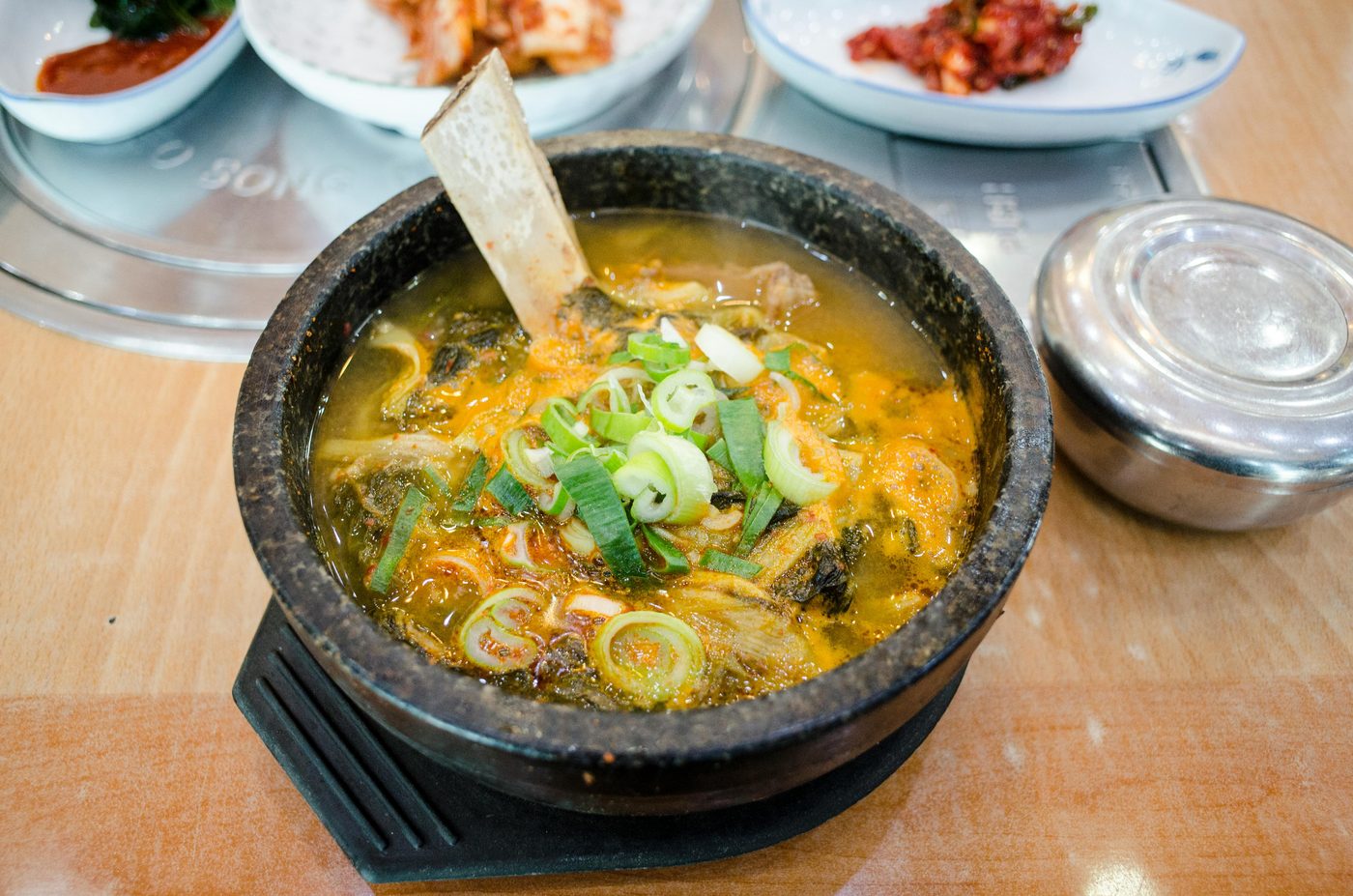
Korea takes hangovers as seriously as the drinking that causes them. There is an entire cuisine category called haejangguk (해장국, literally “hangover soup”) and dedicated restaurants that open at 5 AM specifically for the morning-after crowd.
- Haejangguk: A spicy, hearty soup with congealed blood, bean sprouts, and vegetables. Sounds terrible, works miraculously. Available at chain restaurants like Cheongdam Haejangguk.
- Kongguksu: Cold soy milk noodle soup. Gentle on the stomach and surprisingly restorative.
- Hangover drinks: Dawn 808 and Condition are the two most popular, available at every convenience store (2,000-3,000 KRW). Drink before bed, not the morning after. Koreans swear by these.
- Honey water: Hot water with honey. Simple, cheap, actually backed by some science (fructose helps metabolize alcohol).
Sober Alternatives
If you do not drink, Korea has more options than ever:
- Cafe culture is enormous. Korea has more cafes per capita than almost anywhere. Meeting friends for coffee instead of drinks is completely normal.
- Zero-alcohol soju and beer brands are expanding. Cass 0.0 and Hite Zero are widely available.
- Noraebang (karaoke) is fun sober. The room rental is the same whether you drink or not, and nobody cares if you are holding a soda.
- Board game cafes, VR cafes, and escape rooms are popular non-drinking social activities, especially among younger Koreans.
The Bottom Line
Korean alcohol culture is not something to fear or avoid. It is a social institution that, when navigated well, can deepen your relationships and your understanding of the culture in ways that sober interactions simply do not replicate.
Learn the etiquette (two hands, turn away, never pour your own). Have a graceful way to decline when you need it. Do not try to outdrink your Korean colleagues, because you will lose. And always, always order good anju.